
Contents
- Executive Summary
- About Henok Oil
- The Challenge
- Keyword Research
- Tracking Setup
- Campaign Strategy
- Landing Pages
- Results
- Lessons Learned
- Conclusion
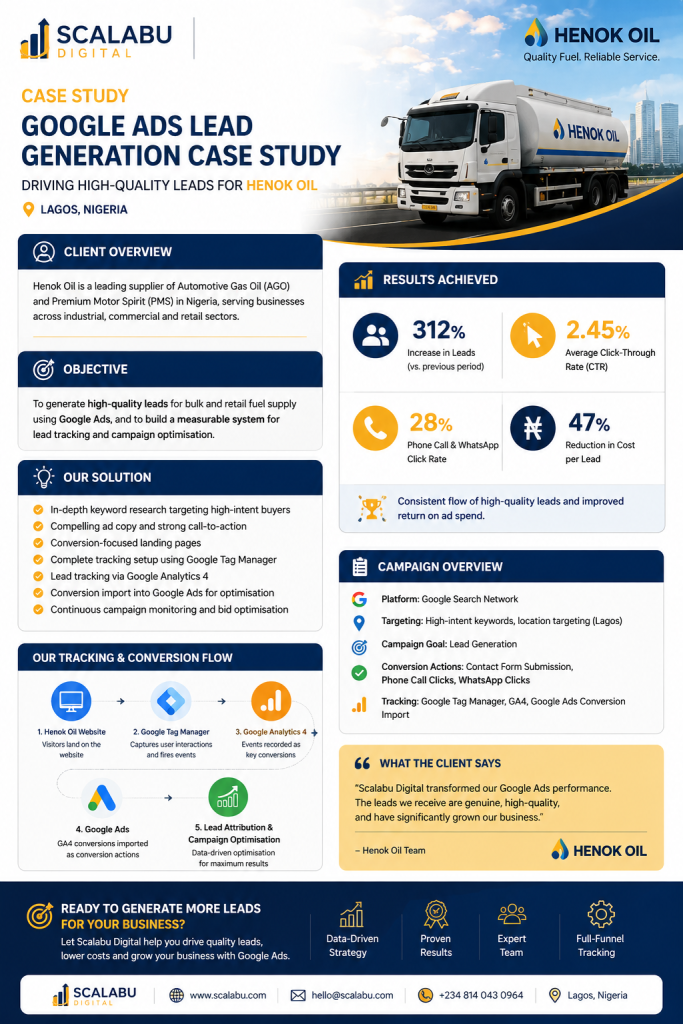
Executive Summary
Running Google Ads is relatively easy. Building a campaign that consistently generates qualified business enquiries is considerably more challenging.
Many businesses invest in paid search expecting immediate results, only to discover they cannot accurately identify which keywords generate leads, which advertisements influence purchasing decisions, or which customer interactions should be measured as conversions.
Without a reliable measurement framework, campaign optimisation becomes guesswork.
This educational case study demonstrates how Scalabu Digital designed a Google Search Ads lead generation framework for Henok Oil, beginning with keyword research, campaign planning, website optimisation, and conversion tracking before a single advert was launched.
Rather than focusing only on advertisements, the project concentrated on building a complete measurement ecosystem that connected the website, Google Tag Manager, Google Analytics 4, and Google Ads into a single reporting framework capable of tracking meaningful customer interactions.
The objective was straightforward:
Build a Google Ads system capable of attracting high-intent prospects while providing accurate conversion data for future optimisation.
About Henok Oil
Henok Oil supplies diesel products and related fuel services to commercial and industrial customers across Lagos.
Its customers typically include businesses requiring dependable diesel supply for marine operations, construction projects, commercial facilities, manufacturing plants, and other organisations where uninterrupted fuel availability is essential.
Unlike many consumer-focused businesses, purchasing decisions within this market are often driven by urgency, reliability, location, and trust rather than impulse.
This makes Google Search one of the strongest acquisition channels because potential customers actively search for suppliers at the exact moment they need them.
The Challenge
Although Henok Oil had an established website, several factors limited its ability to generate measurable enquiries through Google Ads.
The website required improved alignment between search intent and landing pages, conversion tracking had not yet been fully implemented, and there was no reliable framework for attributing enquiries to advertising campaigns.
Launching Google Ads under these conditions would have produced traffic, but very little actionable marketing intelligence.
Instead of immediately creating advertisements, the first priority became building the technical and strategic foundation required for sustainable lead generation.
Project Objectives
The implementation focused on five primary objectives.
- Build a Google Ads-ready website.
- Implement accurate conversion tracking.
- Research high-intent commercial keywords.
- Create a simplified campaign structure that supports ongoing optimisation.
- Prepare the account for data-driven advertising decisions.
These objectives ensured that every future optimisation would be supported by reliable data rather than assumptions.
Step One
Understanding the Business
Every successful Google Ads campaign begins long before keywords are selected or advertisements are written.
The first stage involved understanding how potential customers search for diesel suppliers, what problems they were attempting to solve, and which services represented the highest commercial value.
Rather than attempting to attract every possible search, the strategy prioritised commercial intent.
Users searching for:
- diesel supplier Lagos
- marine diesel supplier
- offshore diesel supply
- diesel delivery near me
are considerably more valuable than users searching for general informational phrases about diesel products.
Understanding this distinction influenced every subsequent decision throughout the project.
Step Two
Market & Keyword Research
Keyword research formed the foundation of the advertising strategy.
Instead of selecting keywords solely because they generated high search volume, the research prioritised phrases that demonstrated immediate purchasing intent.
Using Google Keyword Planner
Google Keyword Planner was used to evaluate potential search terms based on several criteria:
- Average monthly search volume
- Competition level
- Commercial relevance
- Geographic intent
- Cost-per-click estimates
- Related keyword opportunities
The objective was not to identify the largest possible audience, but to identify the most qualified audience.
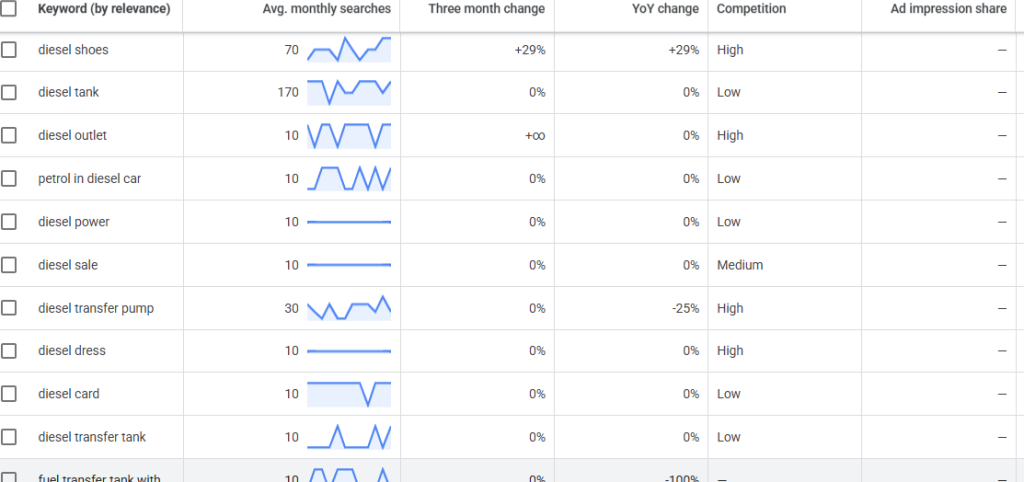
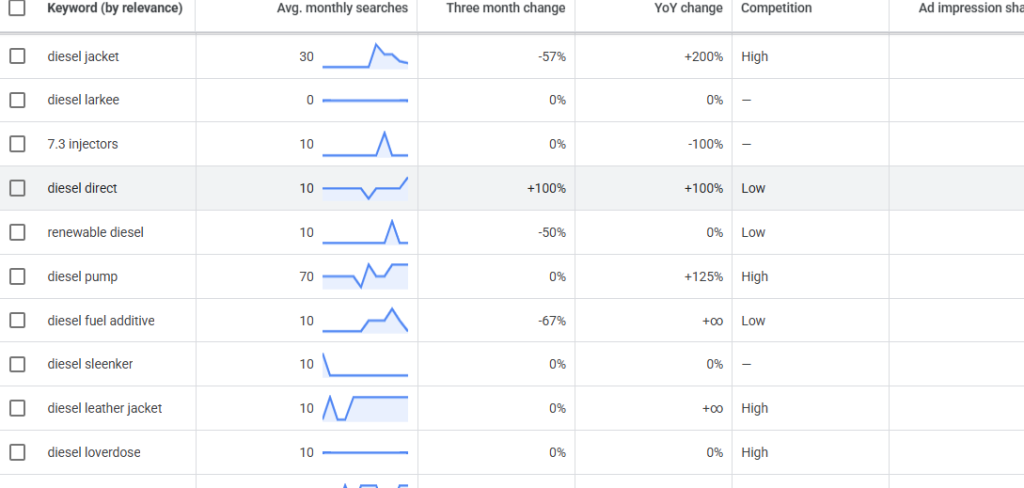
Evaluating Search Intent, Search Volume, and Keyword Relevance
Search volume alone rarely predicts campaign success.
For example, a generic search such as:
diesel
may generate significant traffic but provides very little indication that the user intends to purchase commercial fuel.
Conversely, searches such as:
- diesel supplier in Victoria Island
- bulk diesel supplier in Lagos
- marine diesel delivery
- offshore diesel supplier
demonstrate considerably stronger purchasing intent despite lower search volumes.
Same thing applies to the keyword relevance, keywords such as
- diesel shoes
- diesel card
- diesel jacket
- diesel clothing
search intent from keywords such as this do not have any relevance to the ad’s goal/result. It also doesn’t define the services offered by the company.
This principle guided the final keyword selection.
Keyword Selection
| Keywords | Keyword Type |
| diesel | broad match |
| diesel suppier in lagos | phrase and exact match |
| diesel fuel supplier in lagos | phrase and exact match |
| diesel supplier in victoria island | phrase and exact match |
| diesel supplier in ikoyi | phrase and exact match |
| diesel supplier in lekki | phrase and exact match |
| diesel suppliers near me | phrase and exact match |
| diesel supply company | phrase and exact match |
| AGO supplier Lagos | phrase and exact match |
| bulk diesel supplier | phrase and exact match |
| buy diesel fuel in bulk | phrase and exact match |
| marine diesel supply | phrase and exact match |
| vessel fuel supplier | phrase and exact match |
| fuel supply for vessels | phrase and exact match |
| offshore diesel supplier | phrase and exact match |
Campaign Planning
Rather than separating the account into several narrowly focused ad groups, the final campaign structure consolidated related keyword themes into a single, well-organised Search campaign.
This simplified campaign management while maintaining strong keyword relevance.
The approach also made optimisation significantly easier because budget allocation, search term analysis, and bid adjustments could be performed from one central campaign rather than across multiple fragmented structures.
For small and medium-sized businesses, a simplified structure often produces cleaner reporting and faster optimisation than unnecessarily complex campaign architectures.
Step Three
Building the Measurement Foundation
Why Tracking Comes Before Advertising
One of the most common mistakes businesses make is launching Google Ads before implementing proper conversion tracking.
While advertisements may generate clicks and website visits, they provide very little business value if there is no reliable way to identify which campaigns produce enquiries, phone calls, or quotation requests.
Before any advertising campaign was created, the first priority was establishing a measurement framework capable of recording every important customer interaction.
The objective was simple:
Every marketing decision should be supported by measurable data.
To achieve this, four platforms were integrated into a single tracking ecosystem.
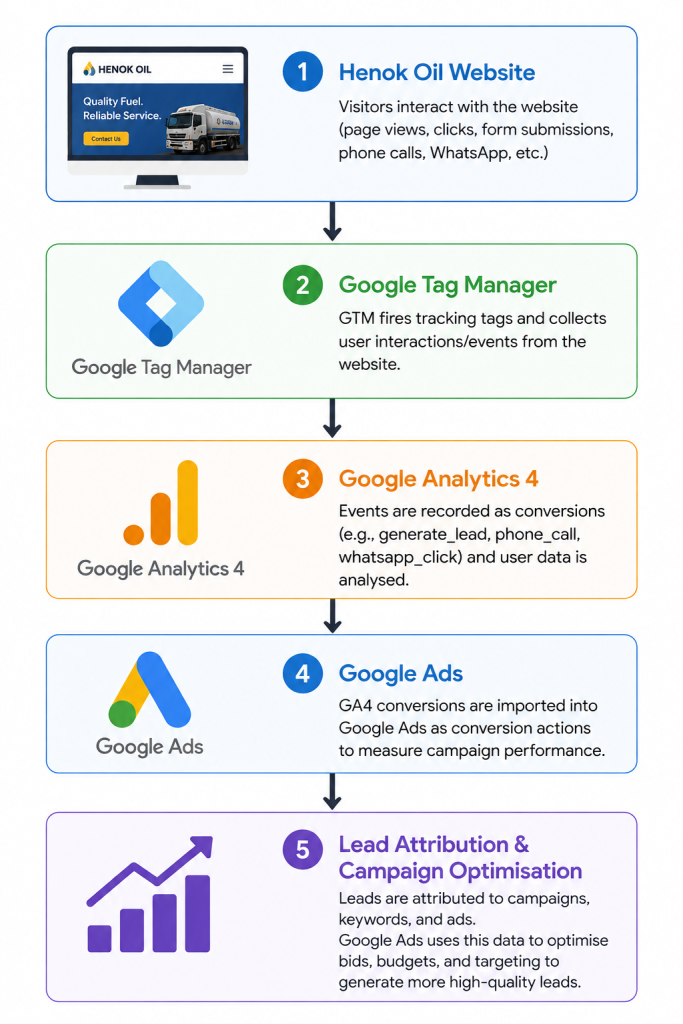
Website Preparation
Before implementing any tracking tools, the website was reviewed to ensure it could support accurate measurement.
Particular attention was given to identifying the pages and user actions that would eventually become measurable conversions.
These included:
- Home page
- Service page
- Contact page
- Quote request buttons
- Whatsapp links
- Telephone links
- Email links
- Service enquiry forms
Instead of tracking every possible interaction, the implementation focused on actions that indicated genuine purchase intent.
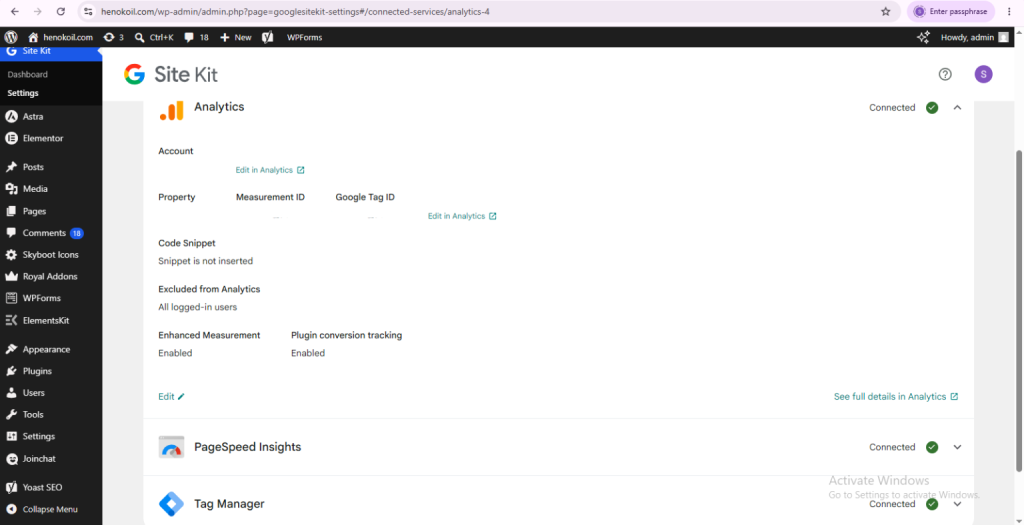
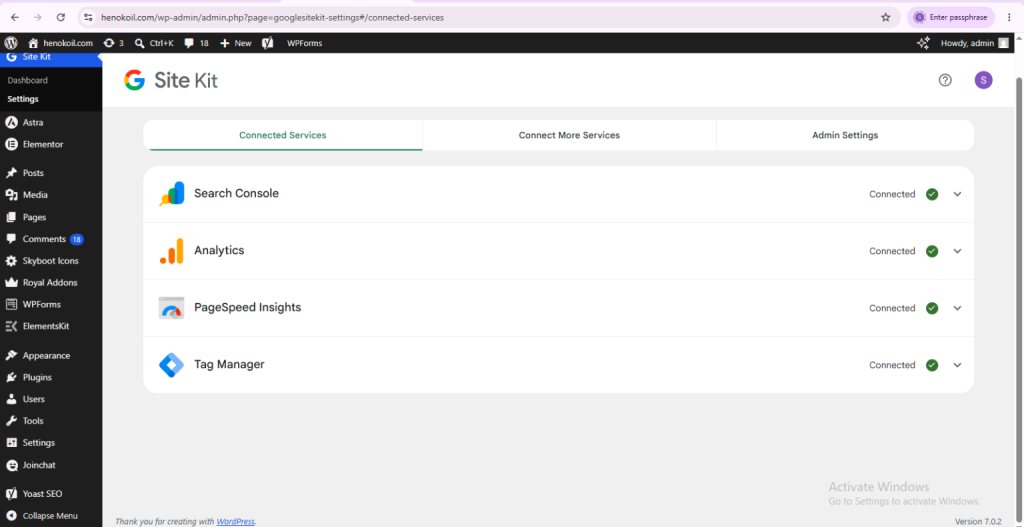
Installing Google Site Kit
Google Site Kit served as the bridge between the WordPress website and Google’s marketing platforms.
Rather than manually inserting tracking scripts throughout the website, Site Kit simplified the connection between WordPress and Google’s ecosystem while providing a central location for managing integrations.
The implementation included connecting:
- Google Analytics
- Google Tag Manager
- Search Console
- PageSpeed Insights
During implementation, additional verification was required because the Tag Manager connection had not initially completed successfully.
Completing this configuration ensured that the correct Google Tag Manager container was installed on the website before any additional tracking was configured.
Linking Google Site Kit to Google Tag Manager
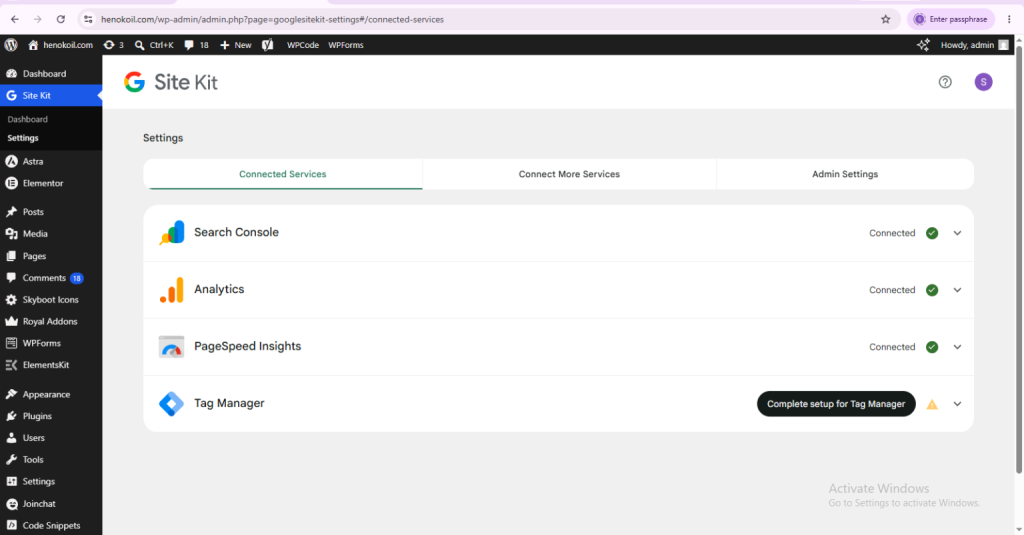
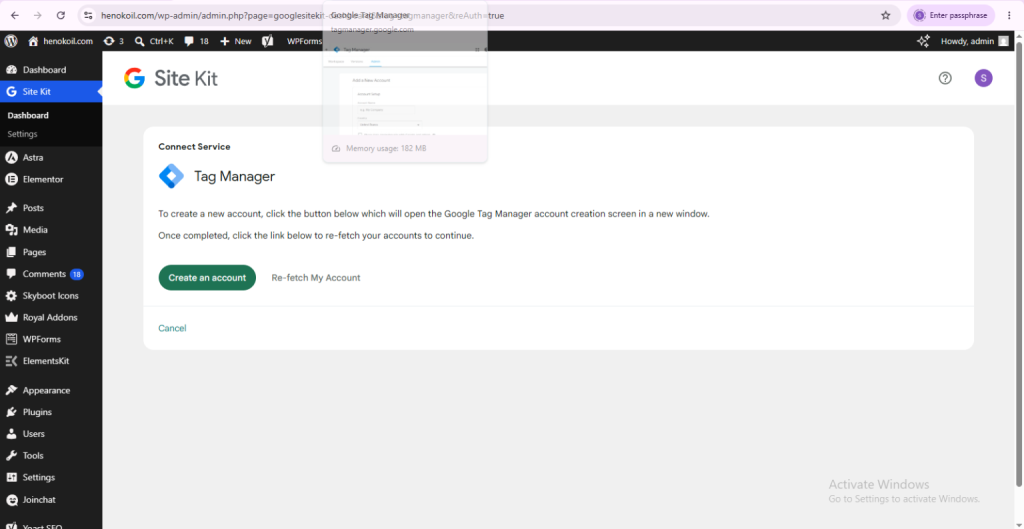
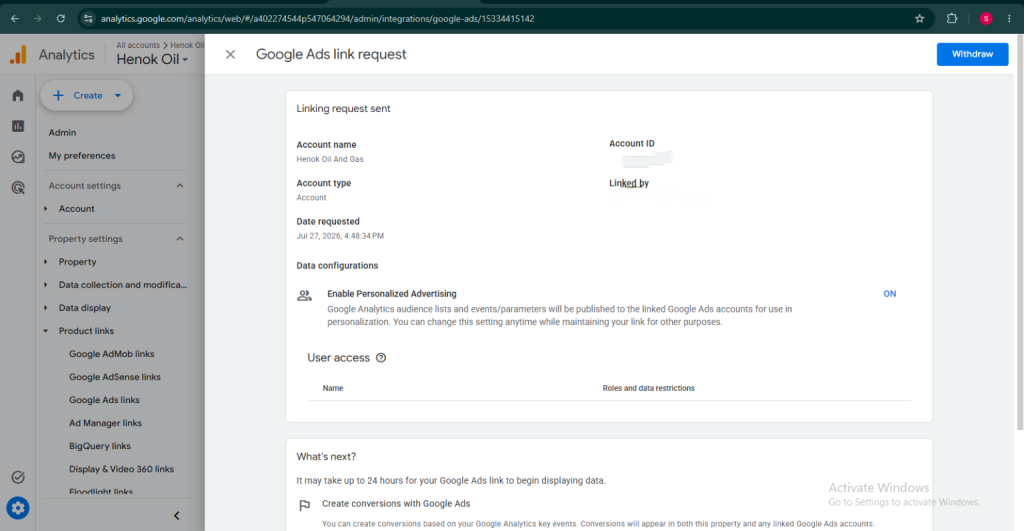
Note: To link Google Site Kit, Google Tag Manager (GTM), and Google Analytics 4 (GA4) successfully, it’s recommended that all three be set up under the same Google account.
If the website has already been configured using a different Google account, grant the Google account connected to Site Kit Admin access to the corresponding Google Tag Manager and GA4 properties before attempting to link them.
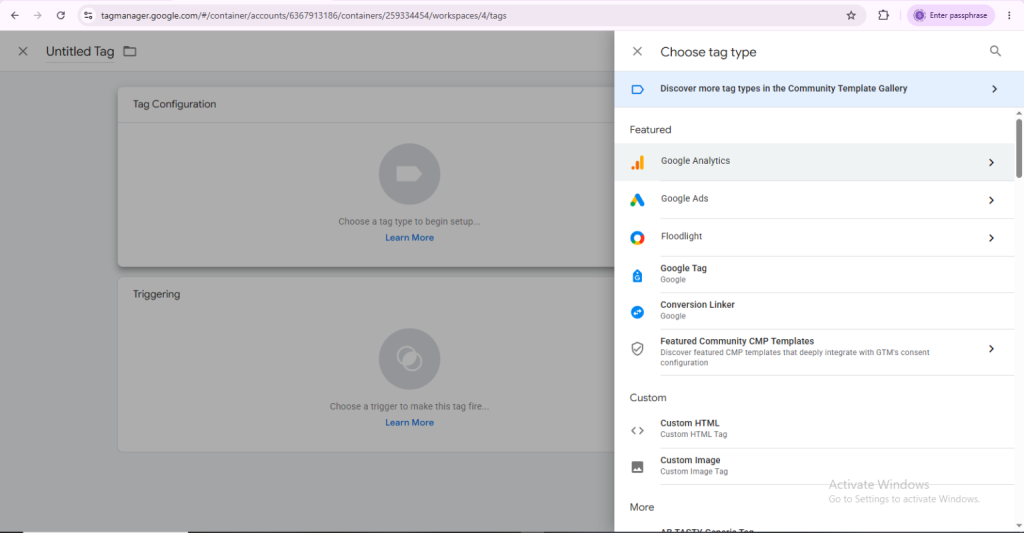
Implementing Google Tag Manager
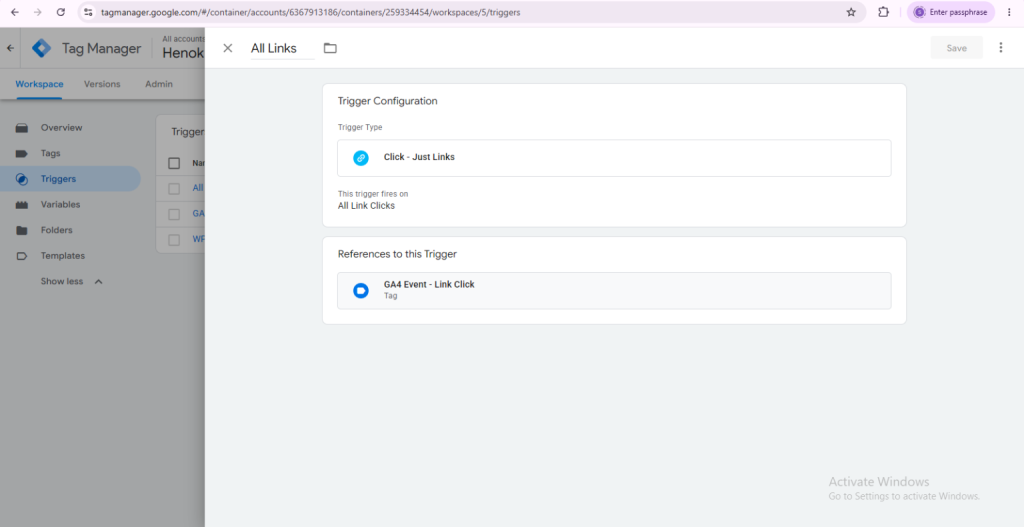
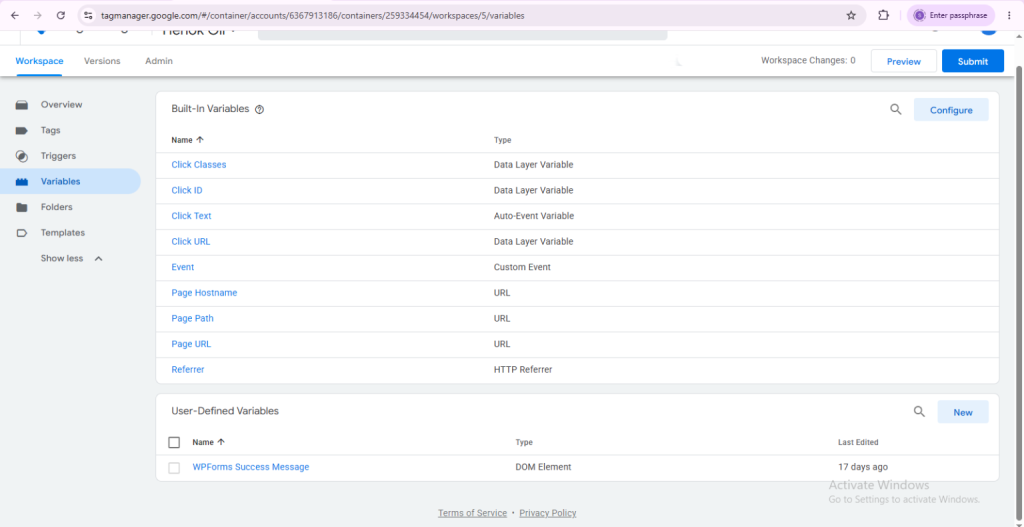
With the website connected to Google Tag Manager, the next objective was establishing a scalable tagging framework.
Rather than embedding tracking scripts directly into the website, Tag Manager became the central location for managing analytics events and future marketing tags.
This approach provides several advantages:
- Faster deployment of new tracking events
- Reduced dependency on website developers
- Simplified debugging
- Centralised tag management
- Easier integration with Google Ads
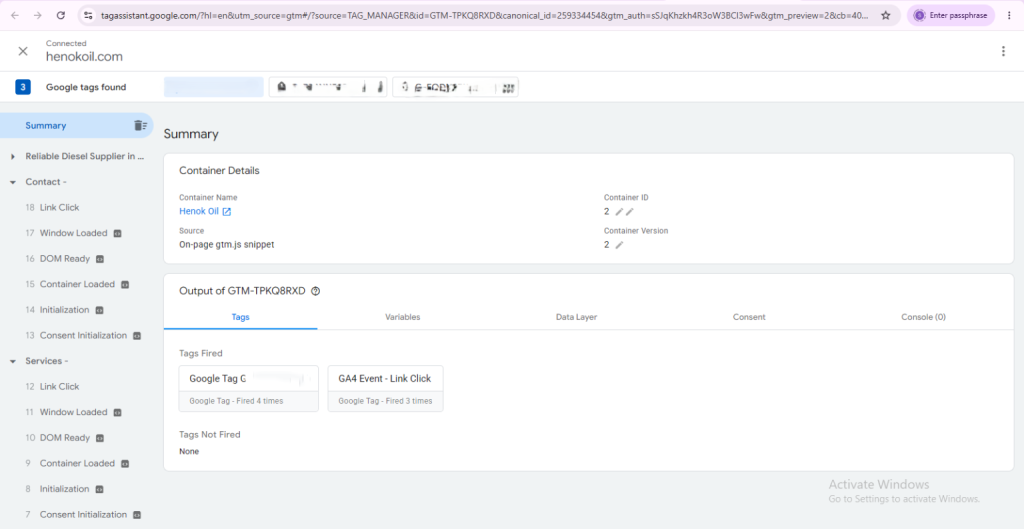
Because future advertising campaigns would depend on accurate attribution, every implementation step was tested before moving forward.
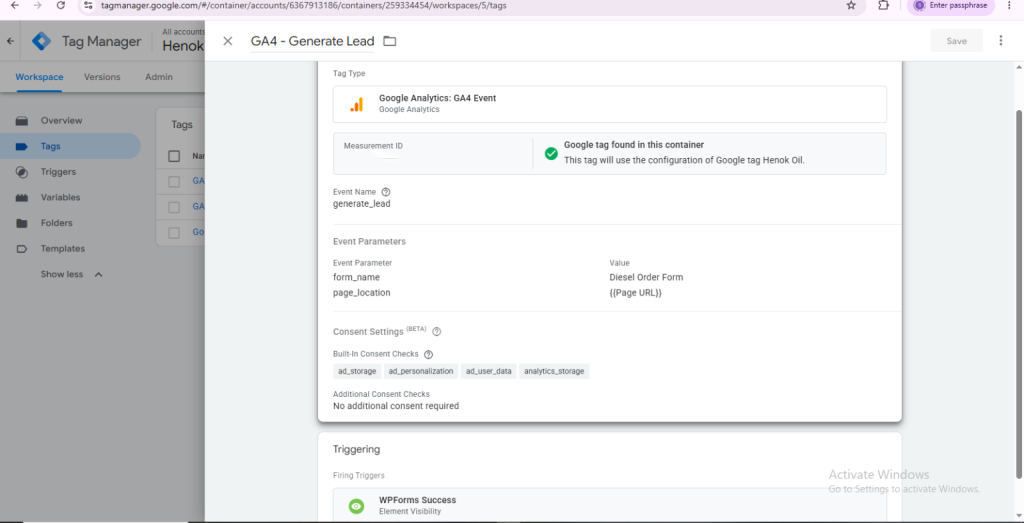
Linking Google Tag Manager to Google Analytics 4
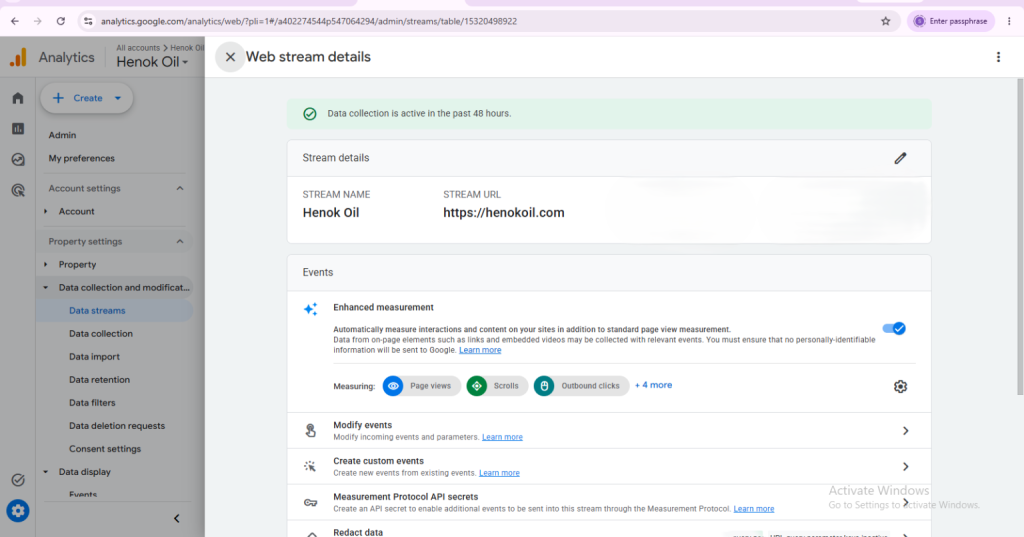
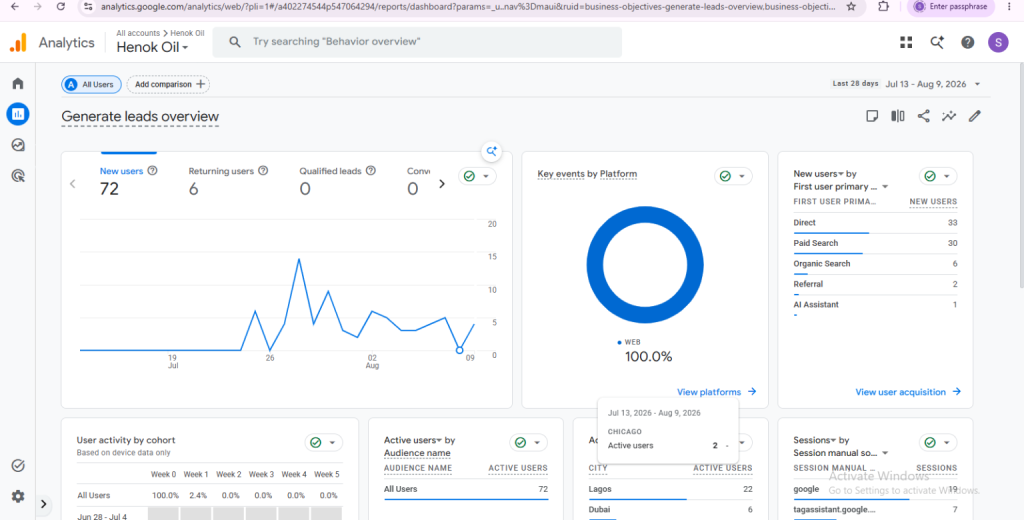
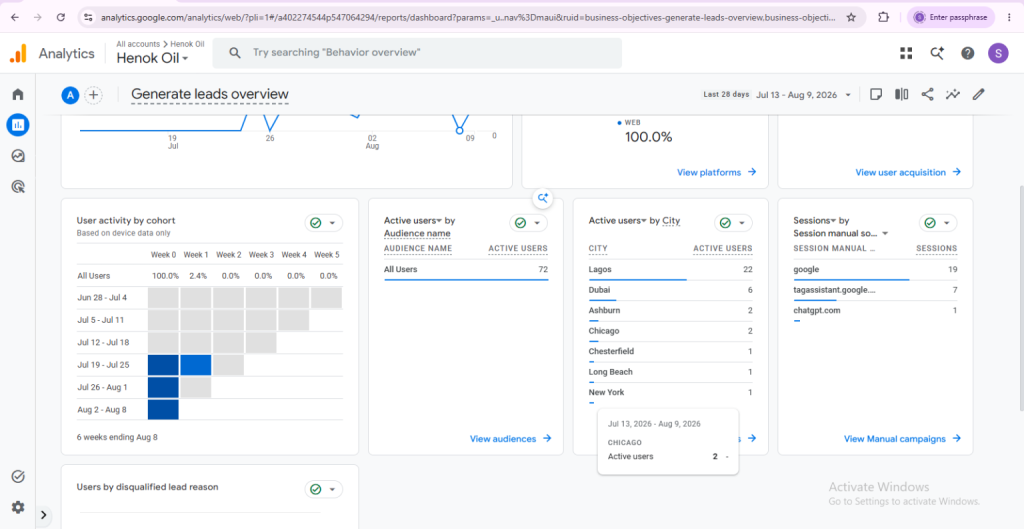
Configuring Google Analytics 4
Google Analytics 4 became the primary reporting platform for user behaviour and conversion measurement.
Instead of relying solely on page views, GA4 was configured to receive meaningful events generated through Google Tag Manager.
The implementation ensured that website activity could eventually be analysed across multiple dimensions, including:
- User engagement
- Landing page performance
- Traffic sources
- Customer interactions
- Lead generation events
Accurate analytics reporting provides the foundation for campaign optimisation because advertising decisions are based on behavioural data rather than assumptions.
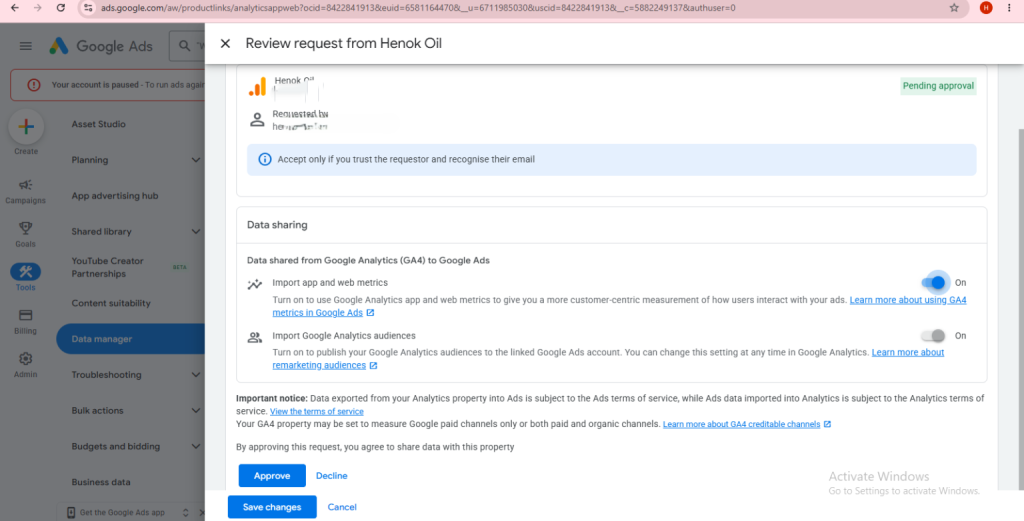
Linking Google Analytics 4 with Google Ads
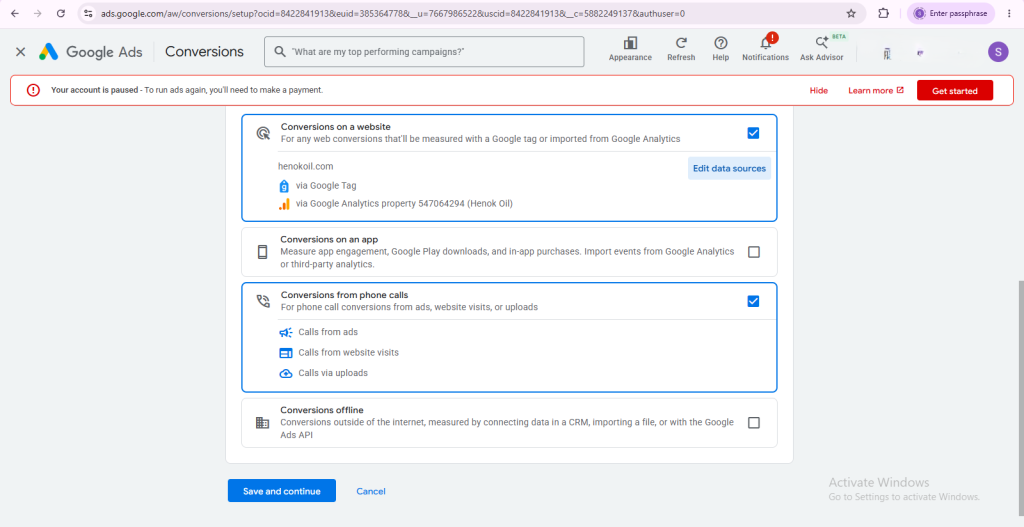
Connecting Google Analytics 4 with Google Ads enables advertising campaigns to optimise for actual business outcomes instead of simple website visits.
Once linked, valuable events recorded within GA4 can be imported into Google Ads as conversions.
This allows Google’s bidding algorithms to prioritise users who are more likely to complete meaningful actions rather than simply clicking an advertisement.
Examples include:
- Contact form submissions
- Telephone enquiries
- WhatsApp enquiries
- Quote requests
This integration transforms Google Ads from a traffic generation platform into a lead generation platform.
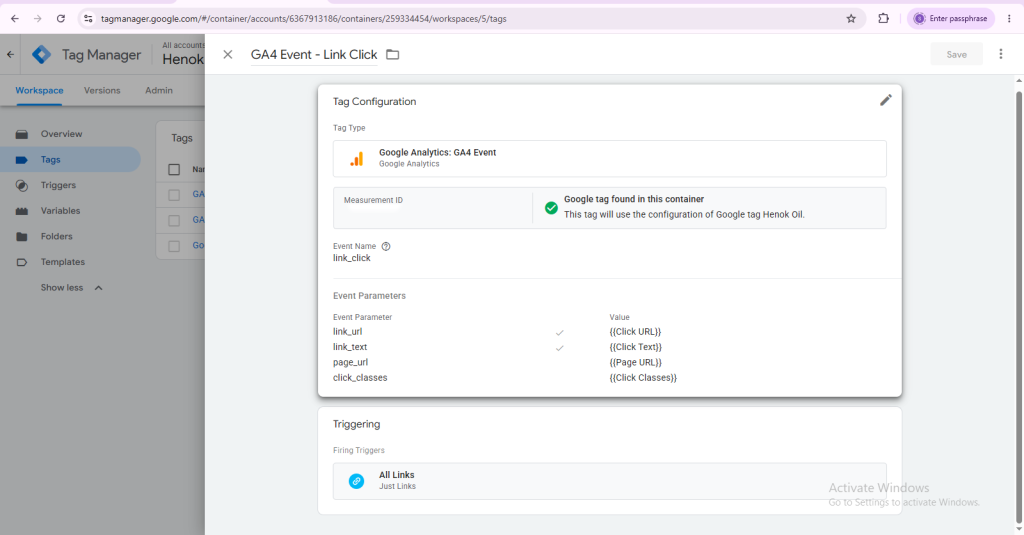
Creating Event Tracking
Once the technical foundation had been established, custom event tracking was implemented.
Rather than measuring only page views, the project focused on capturing customer interactions that demonstrated commercial intent.
The initial implementation included custom tracking for:
| Event | Business Purpose |
|---|---|
| Link Click | Measures user engagement with important website links |
| Contact Form Submission | Indicates a potential sales enquiry |
| Phone Number Click | Tracks direct customer calls |
| WhatsApp Click | Measures messaging enquiries |
| Email Click | Records email-based enquiries |
Each event contributes to a more complete understanding of customer behaviour throughout the buying journey.
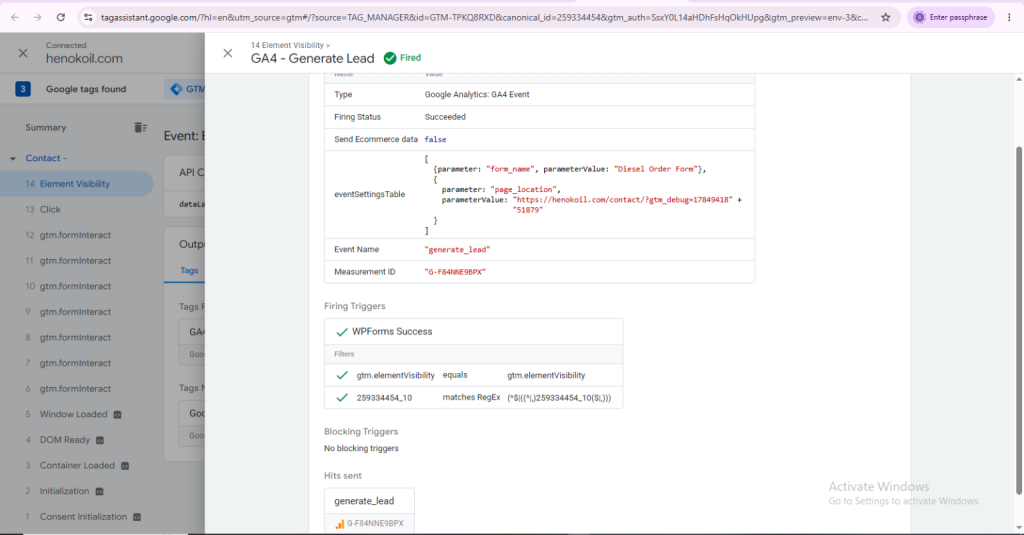
Debugging & Validation
Implementing a measurement framework requires more than creating tags.
Every event must be validated before advertising begins.
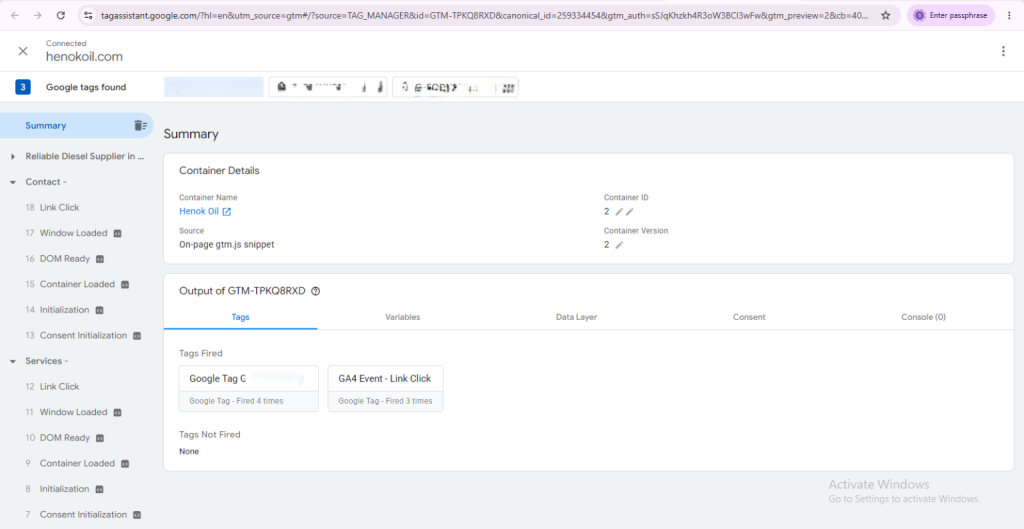
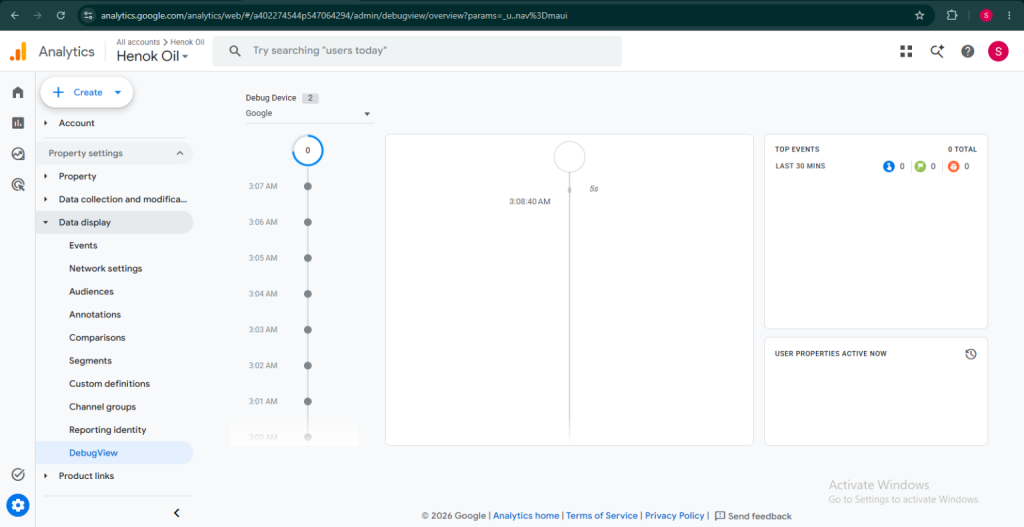
Throughout the implementation, several verification procedures were completed to ensure data accuracy.
The validation process included:
- Confirming the correct Google Tag Manager container
- Verifying the correct GA4 Measurement ID
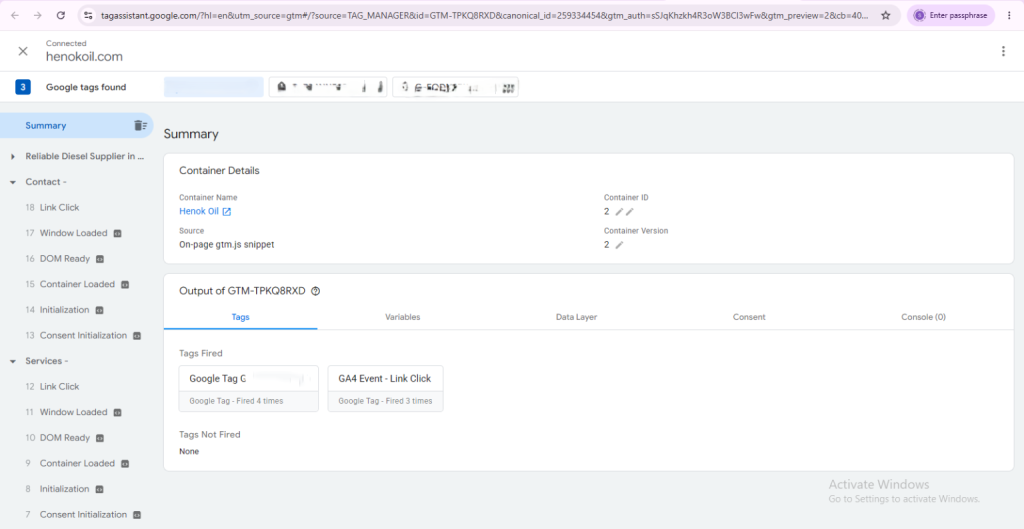
- Testing Preview Mode
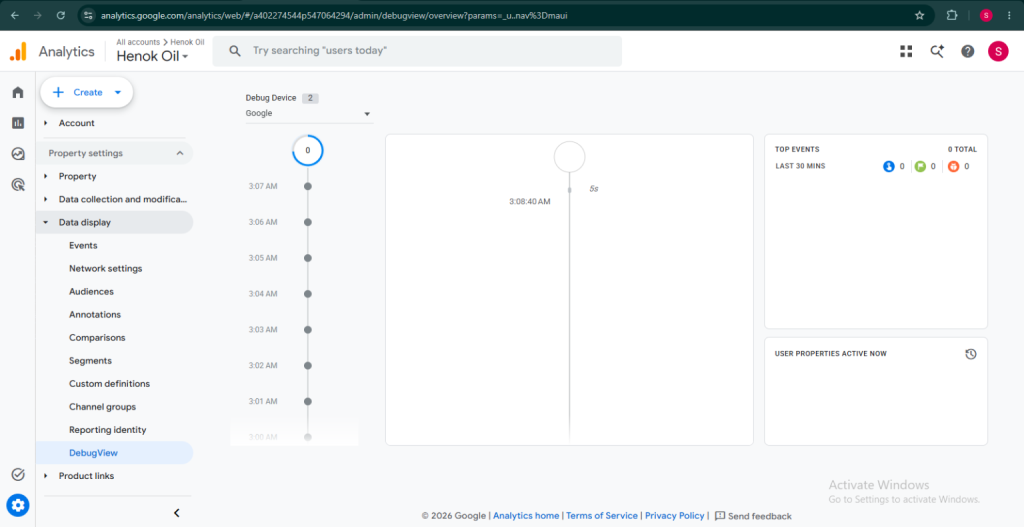
- Reviewing DebugView
- Confirming event firing
- Validating trigger conditions
- Publishing tested configurations
Several implementation issues were identified during testing, including mismatched Measurement IDs, incomplete Site Kit configuration, incorrect trigger assignments, unpublished container changes, multiple gmail account for site kit, tag manager, and ga4 setup.
Resolving these issues before campaign launch ensured that future advertising decisions would be based on reliable conversion data rather than incomplete reporting.
Why This Matters
Many advertisers evaluate campaign performance using metrics such as impressions, clicks, and click-through rate.
While useful, these metrics provide little insight into whether advertising spend generates business opportunities.
By implementing accurate conversion tracking before launching Google Ads, every future optimisation can be based on measurable customer actions rather than assumptions.
This transforms campaign management from reactive guesswork into data-driven decision making.
Scalabu Insight
Successful Google Ads campaigns are built on measurement before marketing.
Many businesses believe Google Ads begins with selecting keywords or writing advertisements.
In reality, those activities come much later.
Without a properly configured measurement framework, campaign optimisation becomes little more than educated guessing.
Establishing a reliable tracking architecture ensures every future optimisation is supported by accurate performance data, creating a stronger foundation for long-term advertising success.
Step Four
Designing the Google Ads Campaign
With the measurement framework in place, attention shifted to building a Google Ads campaign designed to attract high-intent commercial enquiries.
Rather than creating advertisements first and hoping they reached the right audience, every campaign decision was informed by the research completed during the earlier phases of the project.
The objective was not simply to increase website traffic.
The objective was to connect Henok Oil with businesses actively searching for reliable diesel supply services.
Defining the Campaign Strategy
Google Ads offers multiple campaign types, including Search, Display, Performance Max, Demand Generation, Shopping, and Video campaigns.
For Henok Oil, a Search Campaign was selected because it targets users who are already expressing purchase intent through Google Search.
Unlike interruption-based advertising, Search campaigns allow businesses to appear when potential customers are actively looking for a supplier.
For a business that serves commercial clients, this approach provides significantly higher lead quality than broad awareness campaigns.
Why We Consolidated Three Ad Groups into One
The initial campaign structure separated services into three different ad groups.
While this provided detailed segmentation, it also introduced unnecessary complexity for a campaign operating within a focused niche.
After reviewing the keyword themes, search intent, and service overlap, the campaign was restructured into a single, consolidated ad group.
This decision was based on four considerations.
Simplified Management
A single ad group reduces administrative overhead by allowing keywords, advertisements, and search terms to be managed from one location.
Faster Optimisation
Performance data accumulates more quickly when impressions and clicks are concentrated within one ad group rather than being divided across multiple groups.
This enables faster decision-making during the optimisation phase.
Budget Efficiency
Rather than allocating impressions across multiple competing ad groups, the campaign budget is focused on keywords most likely to generate commercial enquiries.
Consistent Messaging
Henok Oil offers related diesel supply services that share similar customer intent.
Consolidating the campaign ensures that users receive consistent messaging regardless of which service-specific keyword they search for.
This structure also simplifies future expansion as additional keywords can be incorporated without redesigning the campaign architecture.
Selecting High-Intent Keywords
The final keyword list prioritised commercial intent over search volume.
Rather than targeting broad informational searches, the campaign focused on users demonstrating a clear intention to purchase diesel supply services.
Examples included:
| High-Intent Keywords | Search Intent |
|---|---|
| Diesel supplier Lagos | Commercial |
| Marine diesel supplier | Commercial |
| Offshore diesel supply | Commercial |
| Bulk diesel delivery | Commercial |
| Commercial diesel supplier | Commercial |
| Diesel delivery near me | Transactional |
Keywords with purely informational intent were deliberately excluded from the initial campaign because they were less likely to generate qualified enquiries.
Organising Keywords by Intent
Although the campaign used a consolidated structure, keywords were still organised internally according to customer intent.
This approach simplified optimisation while maintaining relevance between search queries and advertisement messaging.
The primary themes included:
- Diesel Supply
- Marine Fuel Supply
- Offshore Fuel Services
- Commercial Diesel Delivery
- Emergency Diesel Supply
Grouping keywords by intent rather than by arbitrary categories allows advertisements to address the specific needs behind each search.
Writing Responsive Search Ads
Google’s Responsive Search Ads (RSAs) were used to maximise ad relevance across different search queries.
Instead of creating multiple static advertisements, RSA technology allows Google to test combinations of headlines and descriptions while learning which messages resonate most with potential customers.
The advertisements developed for Henok Oil focused on three themes:
Reliability
Emphasising dependable diesel supply and timely delivery.
Industry Experience
Highlighting expertise in supplying commercial, industrial, and marine clients.
Strong Calls to Action
Encouraging users to request quotations, contact the sales team, or speak directly with a representative.
Rather than relying on promotional language, the advertisements were designed to communicate credibility, availability, and commercial capability.
Building Effective Ad Assets
Search advertisements extend beyond headlines and descriptions.
Additional assets improve visibility within search results while providing users with quicker access to relevant information.
The campaign included several Google Ads assets to improve both user experience and Ad Rank.
Sitelinks
Dedicated sitelinks directed users to high-value pages including:
- Marine Diesel Supply
- Offshore Diesel Supply
- Diesel Supply Services
- Contact Us
Each sitelink pointed to a landing page specifically optimised for both search intent and user experience.
Callout Assets
Callouts were used to reinforce key selling points such as:
- Fast Delivery
- Reliable Supply
- Competitive Pricing
- Commercial Fuel Solutions
- Experienced Team
These assets provide additional context without requiring users to click the advertisement.
Structured Snippets
Structured snippets highlighted the range of services offered by Henok Oil, enabling prospective customers to understand the company’s capabilities before visiting the website.
Matching Advertisements with Landing Pages
One of the most overlooked aspects of Google Ads is ensuring that advertisements deliver users to the most relevant destination.
Rather than directing every visitor to the homepage, dedicated landing pages were selected based on the searcher’s intent.
A user searching for Marine Diesel Supply should arrive on a page focused specifically on marine fuel services.
Likewise, someone searching for Offshore Diesel Supply should be directed to a page addressing offshore operations rather than a generic overview of the business.
This alignment improves user experience while also contributing to higher Quality Scores within Google Ads.
Quality Score Considerations
Google evaluates advertisements based on more than bid amount.
Three factors significantly influence Quality Score:
- Expected click-through rate
- Advertisement relevance
- Landing page experience
The campaign was therefore designed to improve all three areas simultaneously.
Relevant keywords informed advertisement copy, advertisements directed users to closely related landing pages, and those landing pages were optimised to deliver useful information and clear conversion opportunities.
Improving Quality Score can reduce advertising costs while increasing advertisement visibility, making it one of the most valuable optimisation opportunities within any Google Ads account.
Preparing for Campaign Launch
Before activating the campaign, a final quality assurance review was completed.
The review verified that:
- Keyword targeting aligned with campaign objectives.
- Advertisements accurately reflected Henok Oil’s services.
- Landing pages matched user intent.
- Tracking infrastructure was functioning correctly.
- Conversion events were ready for import into Google Ads.
- Ad assets displayed correctly across devices.
Completing these checks reduced the likelihood of launching campaigns with technical issues that could compromise performance or reporting accuracy.
Scalabu Insight
A successful Google Ads campaign is not built by writing better advertisements alone. It is built by ensuring that keywords, ad copy, landing pages, and conversion tracking all reinforce the same user intent.
Many advertisers optimise these elements independently.
At Scalabu Digital, they are treated as components of a single lead generation system.
Step Five
Landing Page Optimisation
Driving qualified visitors to a website is only half of the lead generation process.
Once a potential customer clicks an advertisement, the landing page determines whether that visitor becomes an enquiry or leaves the website.
For this reason, landing page optimisation formed a critical component of the overall Google Ads strategy.
Rather than directing every advertisement to the homepage, dedicated service pages were reviewed and optimised to closely match the intent behind each search query.
This approach improves user experience while supporting stronger campaign performance through improved relevance and Quality Score.
Why Landing Pages Matter
Google Ads does not evaluate advertisements in isolation.
When determining Ad Rank and Quality Score, Google also considers the relevance and usefulness of the landing page.
A highly relevant landing page can improve:
- Advertisement relevance
- User engagement
- Conversion rate
- Cost per click
- Quality Score
Conversely, directing every visitor to a generic homepage often creates unnecessary friction, forcing users to search for the information they expected to find immediately.
Reducing this friction increases the likelihood that visitors will complete a valuable action.
Aligning Pages with Search Intent
Throughout the optimisation process, each landing page was evaluated against the intent behind the keywords it was designed to support.
For example, a business searching for marine diesel supplier expects to find information specifically related to marine fuel services—not a broad overview of the company.
Similarly, a user searching for offshore diesel supply is seeking specialised information that demonstrates capability within offshore operations.
Matching search intent with page content helps users find answers more quickly while signalling greater relevance to Google’s advertising platform.
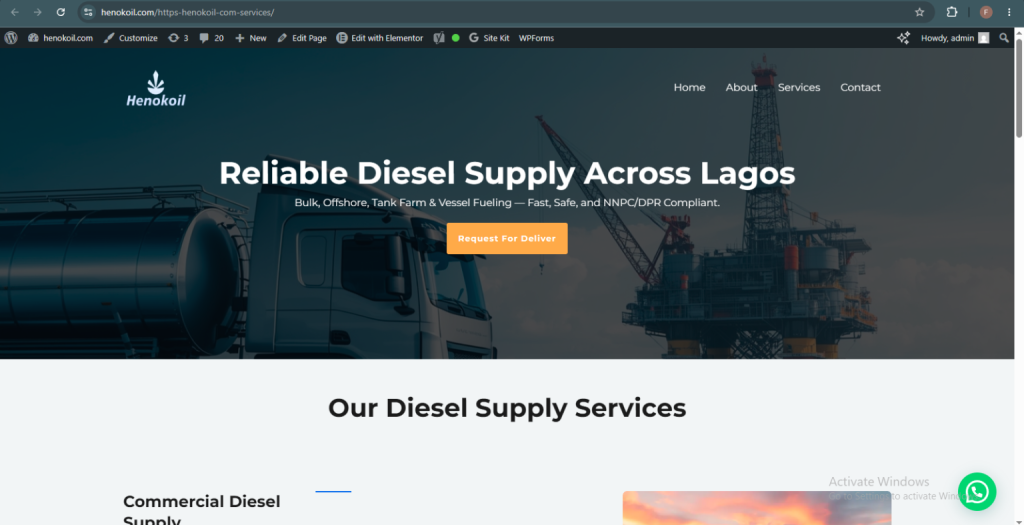
Optimising Core Service Pages
Several high-value service pages were reviewed and refined to better support the Google Ads campaign.
These pages included service-specific content designed to address the needs of commercial buyers while reinforcing the messaging used throughout the advertisements.
The optimisation focused on pages such as:
- Home Page
- Diesel Supply Services
- Marine Diesel Supply
- Offshore Diesel Supply
- Contact Us
- About Henok Oil
Additional location-focused service pages were also prepared to strengthen local search relevance for commercial customers across Lagos.
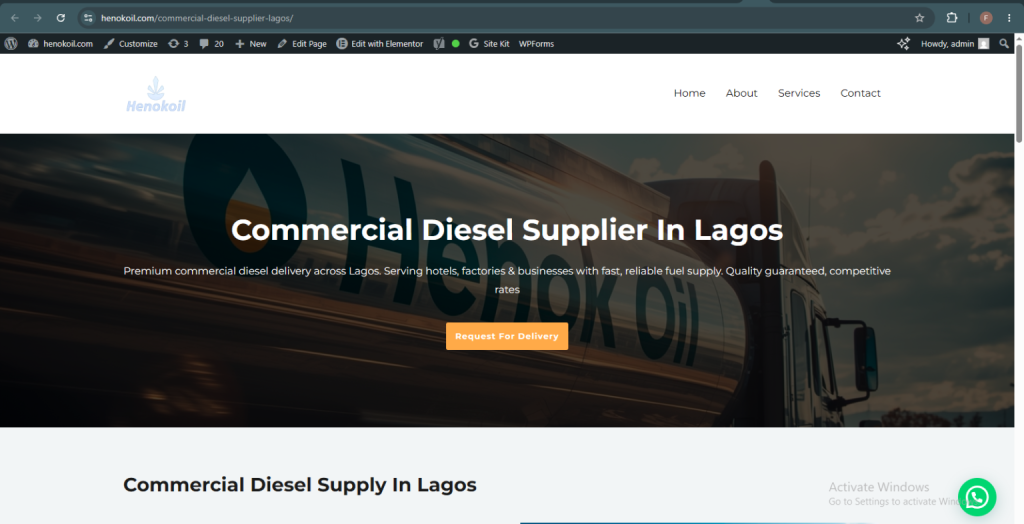
Optimising Google Ads Sitelinks
Sitelinks provide users with additional navigation options directly from the search results.
Rather than linking sitelinks to generic website pages, each destination was selected because it addressed a specific customer need identified during keyword research.
Examples included:
| Sitelink | Destination Purpose |
|---|---|
| Marine Diesel Supply | Industry-specific service information |
| Offshore Diesel Supply | Offshore operations and supply solutions |
| Diesel Supply Services | Overview of fuel supply capabilities |
| Contact Us | Direct enquiry options |
Each destination page was reviewed to ensure consistency between:
- Search keyword
- Advertisement messaging
- Landing page content
- Call-to-action
This alignment creates a smoother customer journey from search query to conversion.
Improving Content Relevance
Landing page optimisation extended beyond technical SEO.
Content was reviewed to ensure that visitors could quickly understand:
- What Henok Oil offers
- Who the services are designed for
- Geographic service coverage
- Why businesses should choose Henok Oil
- How to request a quotation or make an enquiry
Clear headings, concise service descriptions, and commercially focused messaging help reduce uncertainty during the decision-making process.
Strengthening Conversion Paths
Every landing page should encourage users to take the next logical step.
For Henok Oil, this meant making it as easy as possible for prospective customers to contact the business through their preferred communication channel.
Conversion-focused elements included:
- Contact forms
- Click-to-call phone numbers
- WhatsApp contact buttons
- Email enquiry links
- Clear call-to-action buttons
Rather than competing for attention, these elements were positioned to guide visitors naturally toward making an enquiry.
Mobile Experience
A significant proportion of commercial searches now originate from mobile devices.
Because many potential customers require immediate assistance while working on-site or coordinating logistics, ensuring a seamless mobile experience was an important consideration.
Landing pages were reviewed to confirm that:
- Navigation remained intuitive on smaller screens.
- Contact options were easily accessible.
- Call-to-action buttons remained prominent.
- Page content remained readable without excessive scrolling.
Providing a consistent experience across devices helps minimise unnecessary barriers during the enquiry process.
Supporting Google Ads Quality Score
Landing page optimisation contributes directly to Google Ads performance.
Google evaluates the relationship between:
- Search keyword
- Advertisement
- Landing page
When these three elements reinforce one another, campaigns typically benefit from stronger Quality Scores.
Higher Quality Scores may contribute to:
- Improved advertisement positioning
- Lower average cost per click
- Better user engagement
- More efficient use of advertising budget
Rather than attempting to increase bids alone, improving landing page relevance creates a more sustainable foundation for long-term campaign performance.
Before-and-After Improvements
Throughout the optimisation process, several enhancements were made to strengthen the user experience and better support lead generation.
| Area | Before | After |
|---|---|---|
| Page relevance | General service information | Service-specific messaging |
| Navigation (Home/Contact page) | Broken internal links | Restored all broken links to improve user experience. |
| Calls to Action | Limited visibility | Prominent enquiry options |
| Contact Methods | Basic contact details | Multiple communication channels |
| Sitelinks | Standard page links | Optimised service destinations |
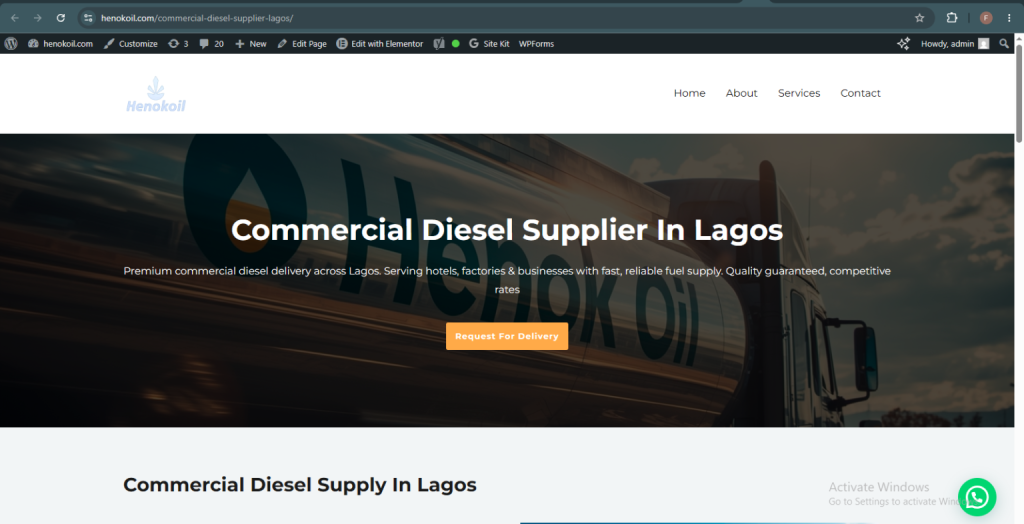
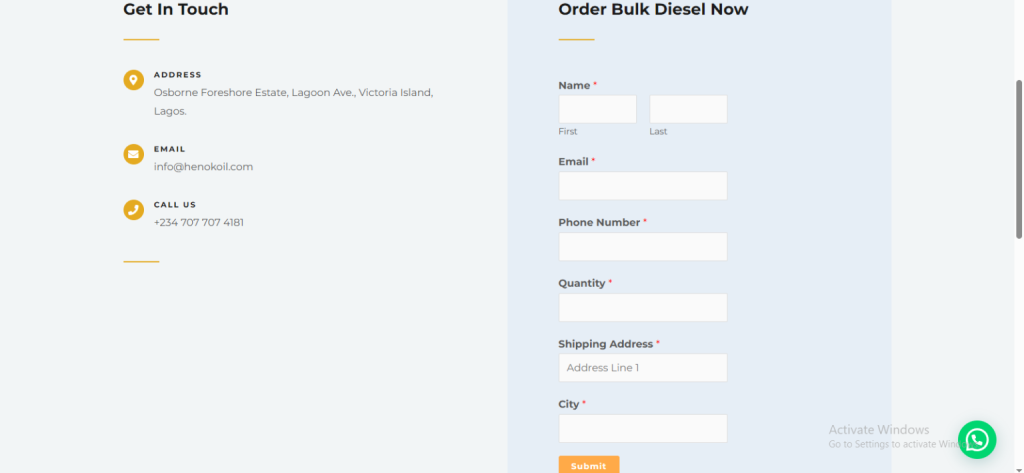
Creating a Unified Customer Journey
Every component of the campaign was designed to work together.
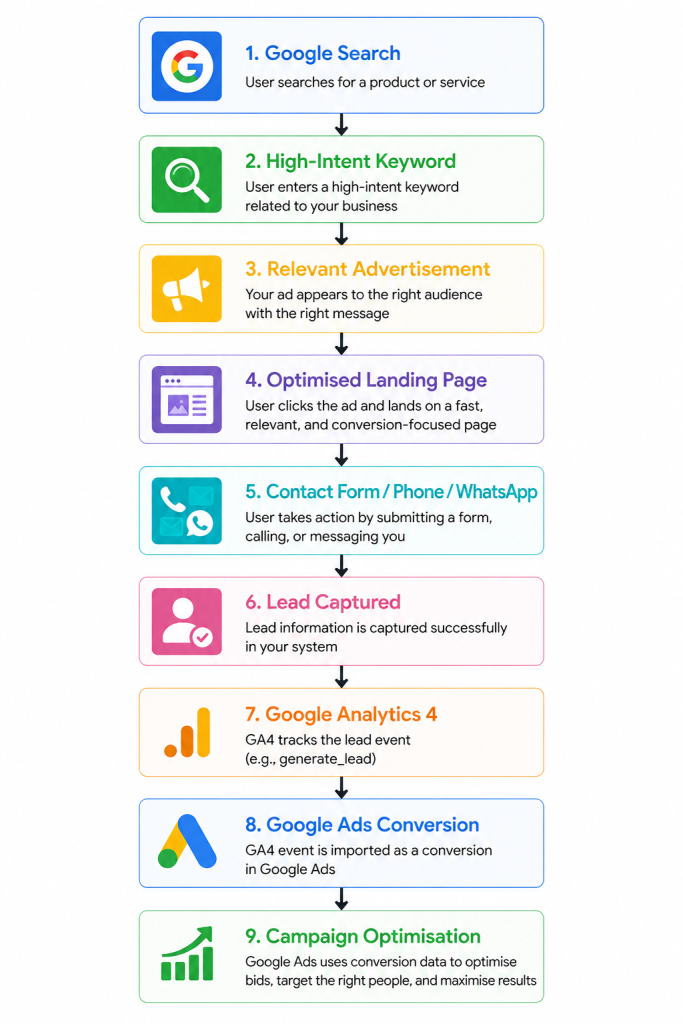
This journey demonstrates that successful lead generation depends on more than attracting clicks.
Each stage must reinforce the next, reducing friction and making it easier for prospective customers to become qualified enquiries.
Scalabu Insight
Clicks don’t generate revenue—conversions do.
Many advertisers focus almost exclusively on improving click-through rates or reducing cost per click.
While these metrics are useful, they represent only the beginning of the customer journey.
The true objective is to guide visitors from search results to meaningful business enquiries through a seamless experience that aligns search intent, advertisement messaging, landing page relevance, and conversion tracking into one integrated system.
Stage 6
Campaign Launch & Quality Assurance
With the research completed, the tracking infrastructure validated, and the campaign fully configured, the final stage before launch focused on quality assurance.
Rather than activating the campaign immediately after creating advertisements, every component was reviewed to ensure that data collection, advertisement delivery, and landing page experience aligned with the original campaign objectives.
A successful launch depends as much on preparation as it does on campaign strategy.
Pre-Launch Checklist
Before the campaign was activated, the following areas were reviewed.
| Component | Status |
|---|---|
| Google Ads Campaign Configured | ✓ |
| Keyword Research Completed | ✓ |
| Responsive Search Ads Created | ✓ |
| Sitelinks Configured | ✓ |
| Callout Assets Added | ✓ |
| Structured Snippets Added | ✓ |
| Landing Pages Optimised | ✓ |
| Google Tag Manager Published | ✓ |
| GA4 Connected | ✓ |
| Google Ads Linked to GA4 | ✓ |
| Conversion Events Created | ✓ |
| Event Testing Completed | ✓ |
Completing this checklist reduced the likelihood of launching campaigns with missing assets, broken tracking, or incomplete reporting.
Validating Conversion Tracking
Before investing advertising budget, it was essential to verify that every important customer interaction could be measured accurately.
The implementation process included testing:
- Contact form submissions
- WhatsApp clicks
- Telephone clicks
- Email clicks
- Page views
- Link click events
Google Tag Manager Preview Mode and Google Analytics DebugView were used throughout implementation to confirm that events fired correctly before being published.
This ensured that campaign optimisation would be based on genuine customer behaviour rather than incomplete or inaccurate data.
Preparing Google Ads for Machine Learning
Modern Google Ads campaigns rely heavily on machine learning.
However, Google’s bidding algorithms can only optimise effectively when they receive reliable conversion signals.
By implementing accurate conversion tracking before launch, the campaign was prepared to provide Google Ads with high-quality behavioural data from the very beginning.
Instead of optimising for clicks alone, future bidding strategies could be refined using meaningful business outcomes such as enquiries, quotation requests, and direct customer contact.
Monitoring During the Learning Phase
Every newly launched campaign enters a learning period while Google’s systems collect sufficient performance data.
During this stage, significant changes are generally avoided to allow the algorithm to stabilise.
Initial monitoring typically focuses on:
- Search impression share
- Click-through rate
- Cost per click
- Search terms
- Conversion events
- Landing page engagement
These early indicators provide valuable insight into campaign health while establishing a baseline for future optimisation.
Continuous Improvement
Launching a campaign is not the conclusion of the process.
It marks the beginning of ongoing optimisation.
Performance marketing is iterative by nature.
As customer behaviour changes and additional data becomes available, campaigns can be refined through continuous testing and analysis.
Areas commonly reviewed include:
- Keyword performance
- Search term reports
- Negative keyword additions
- Advertisement testing
- Asset performance
- Bid adjustments
- Landing page engagement
- Conversion quality
Rather than relying on assumptions, optimisation decisions are driven by measurable performance data collected throughout the campaign lifecycle.
Stage 7
Campaign Optimization
Search Term Analysis
Google shows actual searches.
We discovered:
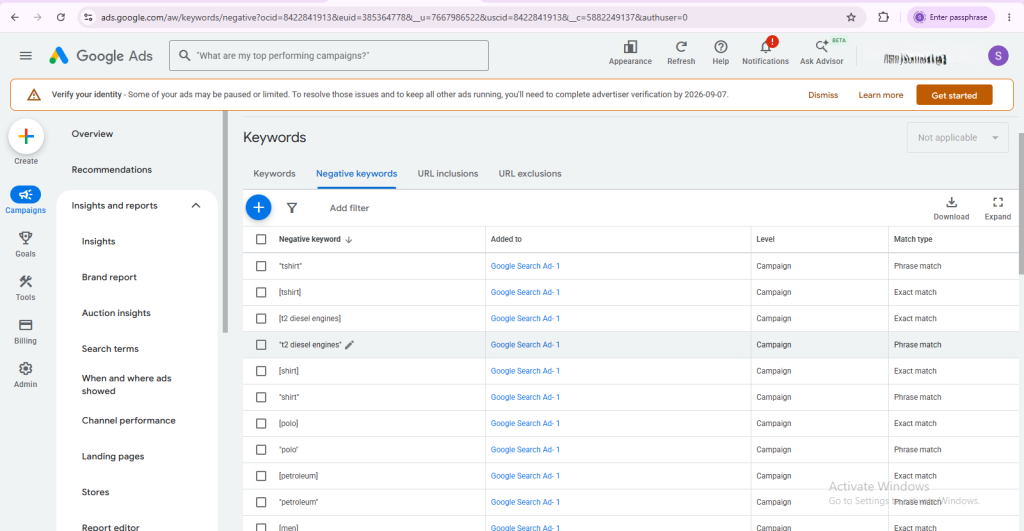
- Added irrelevant search terms to the negative keyword list during ongoing campaign optimization to reduce wasted ad spend and improve traffic quality.
- Identified high-performing and relevant search terms to capitalize on by incorporating long-tail keywords and location-specific targeting into the campaign.
Result:
Negative keywords added.
Keyword Optimization
Additional keyword optimizations:
- Paused: A keyword can be paused to identify the impact it had on a campaign.
- Added: Additional keywords and the impact it had on the campaign result.
- Modified Match Types: If keyword was changed from one match type to another, and the impact it had on the campaign result.
- Expanded Keywords: If a long tail/relational keyword was added or edited.
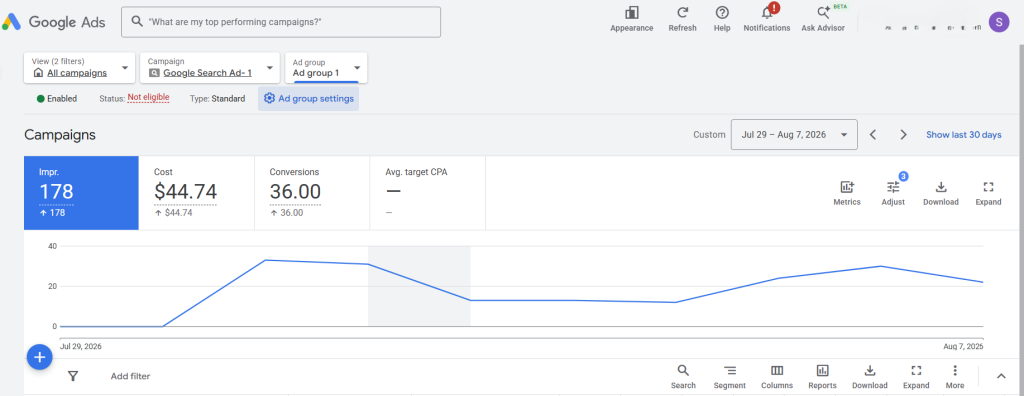
Ad Performance
Asset report to look out for:
- Which headlines worked?
- CTR
- Which description worked the most?
- Which asset performance?
- Responsive Search Ads
Landing Page Optimization
Some questions to guide you:
- Maybe: Does a specific landing page need to be further optimized, changed or removed from the campaign
- Changed CTA: Was a cta changed? What impact did it have on the campaign?
- Improved copy: Comparison of initial copy to an improved copy for the campaign.
- Added Trust Signals: If there was any additional enhancements to the campaign to strengthen its credibility and present the business as more trustworthy and reliable to potential customers.
- Improved contact section: If the contact section for the campaign was improved.
Budget Optimization
Some questions to ask to ensure budget is being optimized:
- Did one keyword consume all the budget?
- Did one location outperform another?
- Did mobile outperform desktop?
Conversion Analysis
Analysis to lookout for to ensure max budget optimization:
- Which/what generated leads?
- Phone?
- WhatsApp?
- Forms?
Audience Insights
Insights to note for a sustainable audience demography
- Time of day
- Device
- Location
- Returning visitors
Scalabu Insight
Optimization isn’t changing things every day.
It’s making small, informed improvements based on statistically meaningful data.
Stage 8
Results & Performance Analysis
Campaign Overview
Traffic Growth
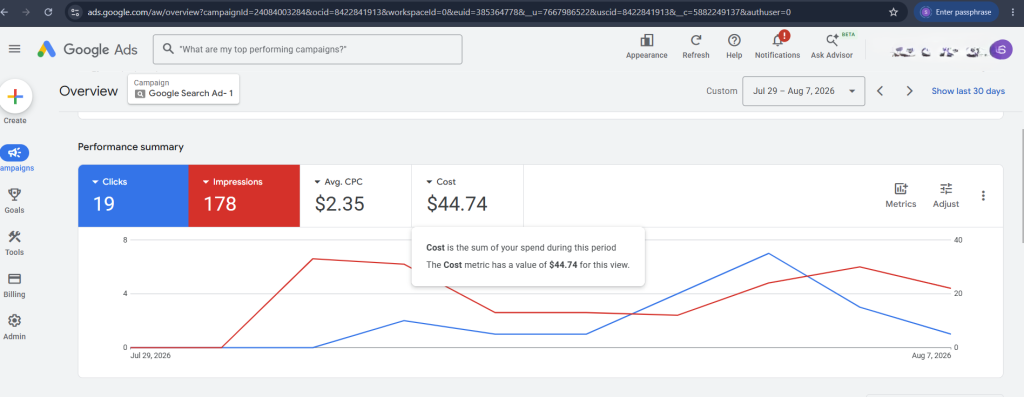
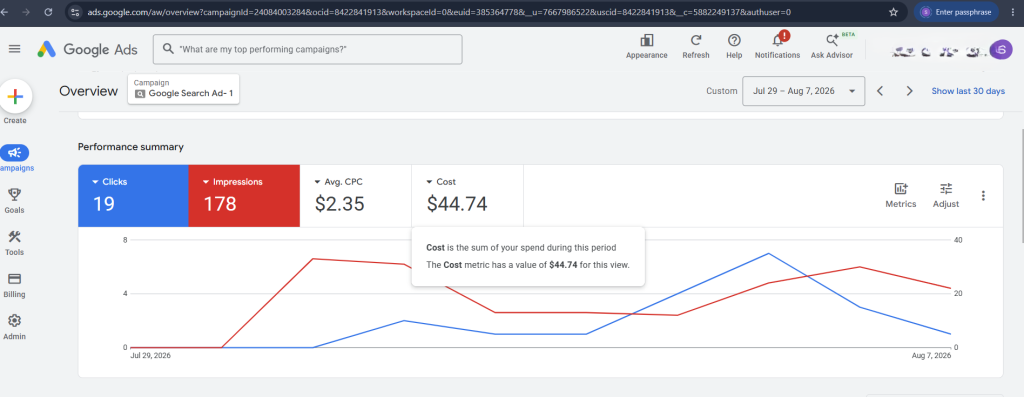
Analytics to lookout for:
Graph, Clicks, Impressions, CTR etc.
Conversion Growth
Analytics to lookout for:
Phone Calls, Forms, WhatsApp, Emails etc.
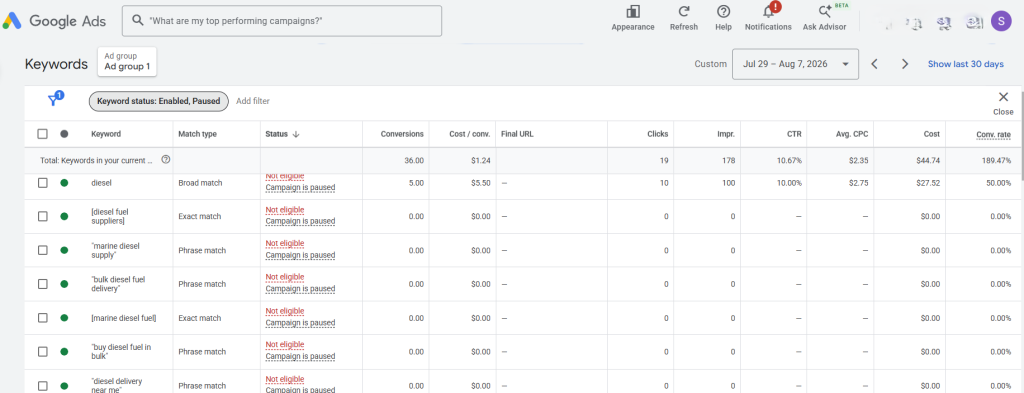
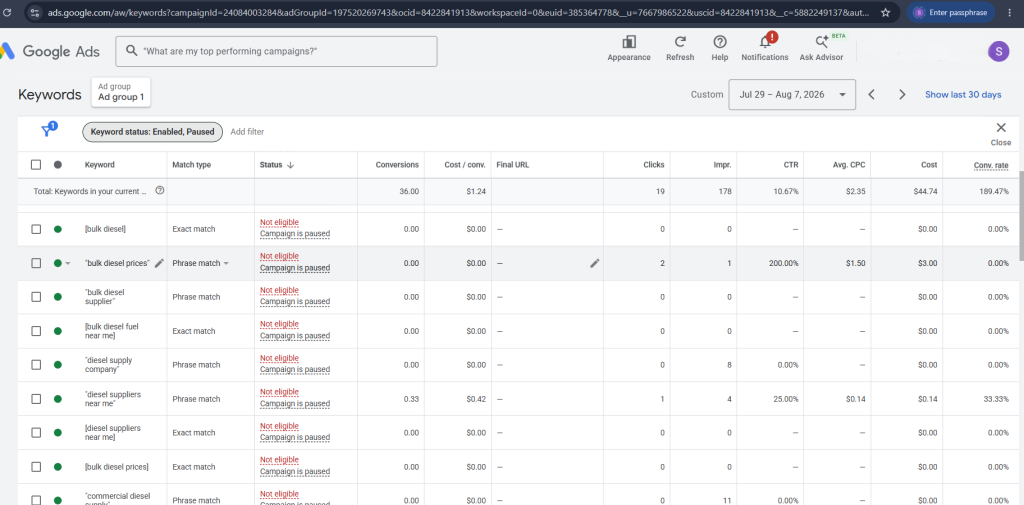
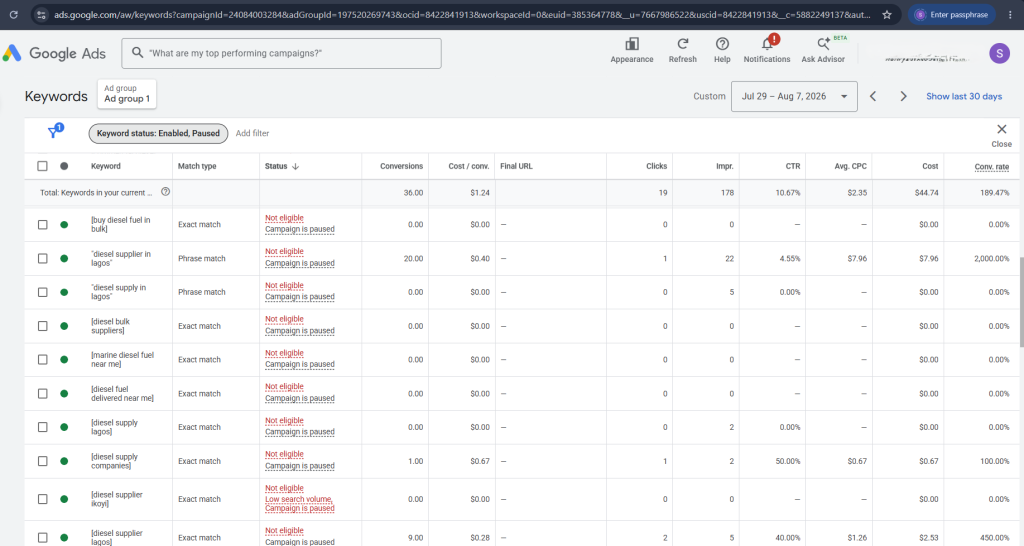
Keyword Winners
Analytics to lookout for:
Keyword, Clicks, Leads. CPL etc.
Landing Page Performance
Analytics to lookout for:
Which page had the most conversion?
Geographic Performance
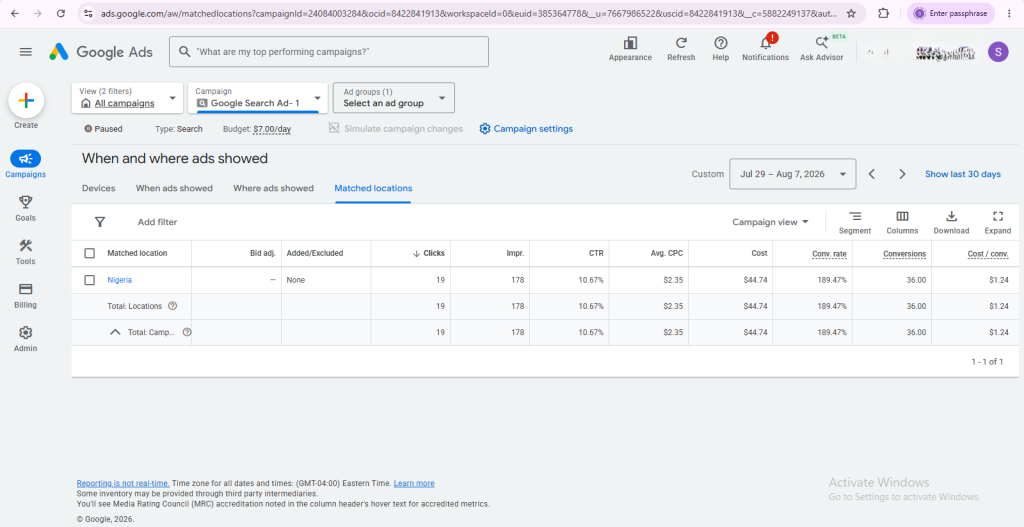
Analytics to lookout for:
Map: Lagos, Lekki, VI, Ikoyi etc.
Device Performance
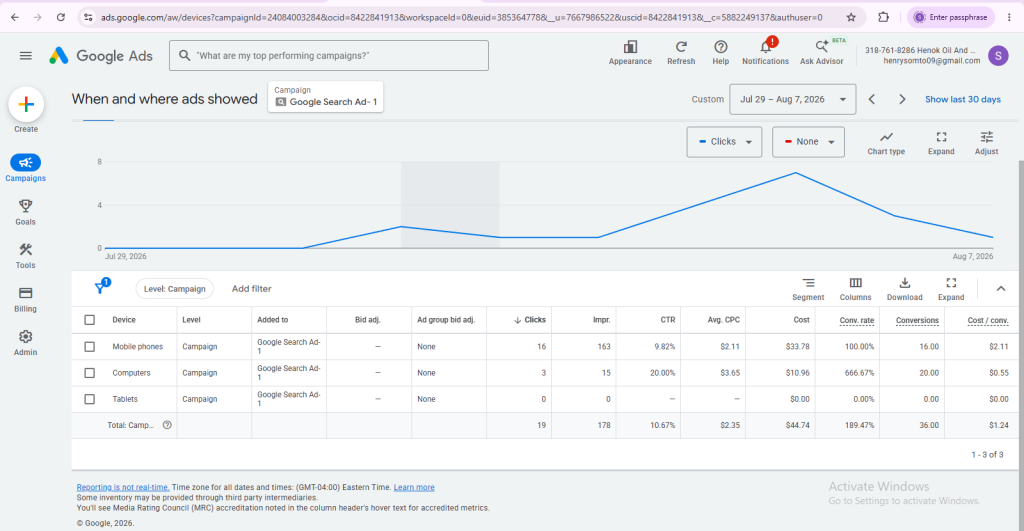
Analytics to lookout for:
Desktop, Mobile and Tablet.
Cost Analysis
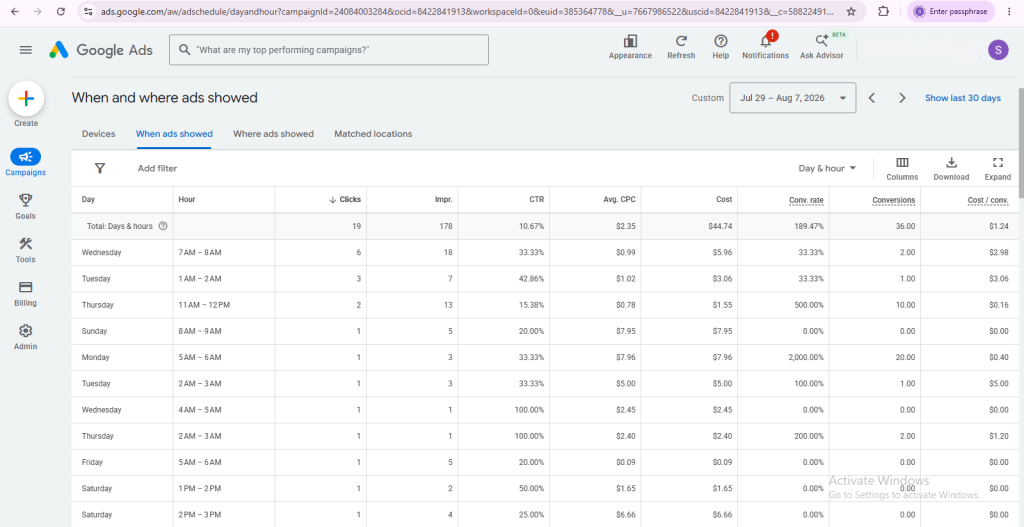
Analytics to lookout for:
Cost, CPC, CPA, ROAS (if applicable).
Business Impact
This is the section many agencies forget.
Don’t stop at marketing metrics.
Discuss business outcomes such as:
- Increase in qualified enquiries
- Faster response times due to better lead tracking
- Improved visibility for high-intent searches
- Better understanding of customer behavior
- Foundation for future campaign scaling
Scalabu Insight
The success of this campaign wasn’t defined by the day it launched, but by the quality of data it generated for continuous improvement.
Stage 9
Lessons Learned
Technical Lessons
- Test every event before publishing.
- Always verify Measurement IDs.
- Ensure the right GTM container is linked.
- Use Preview Mode extensively.
- Use the same google account for all setup from site kit installation on the website.
- You can always start start over from the beginning. I did it thrice before i got it.
- Seek assistance/clarity from professionals.
Marketing Lessons
- Search intent outweighs search volume.
- Only use keywords relevant to the campaign or business service.
- Simpler campaign structures are often easier to optimize.
- Dedicated landing pages improve user experience.
Business Lessons
- Measurement should precede advertising.
- Reliable data supports better decisions.
- Sustainable growth depends on continuous optimization.
Key Takeaways
The Henok Oil implementation demonstrates that successful Google Ads campaigns begin long before advertisements are launched.
Research, measurement, landing page optimisation, and campaign architecture each contribute to the effectiveness of the overall lead generation strategy.
Throughout this project, the emphasis remained on building a scalable marketing system rather than pursuing short-term advertising metrics.
By combining keyword research, conversion tracking, landing page optimisation, and structured campaign planning, the foundation was established for data-driven optimisation as the campaign matures.
While advertisements may attract visitors, it is the integration of strategy, technology, and continuous improvement that ultimately determines long-term performance.
Conclusion
Generating clients through Google Ads requires more than selecting keywords and writing compelling advertisements.
Businesses must first understand how prospective customers search, ensure their website supports meaningful conversions, implement reliable tracking, and continually refine campaigns using accurate performance data.
The Henok Oil implementation illustrates how these components work together to create a structured lead generation system capable of supporting sustainable business growth.
Whether you’re launching your first Google Ads campaign or improving an existing account, investing in the right foundation allows every future optimisation to be based on evidence rather than assumption.
Work With Scalabu Digital
Every successful Google Ads campaign starts with a strategy—not just a budget.
At Scalabu Digital, we help businesses build complete lead generation systems that combine:
- Google Ads Strategy
- Keyword Research
- Google Analytics 4
- Google Tag Manager
- Conversion Tracking
- Landing Page Optimisation
- Search Engine Optimisation
- Performance Reporting
From technical implementation to ongoing campaign optimisation, our approach is designed to help businesses attract qualified leads, measure meaningful outcomes, and make confident marketing decisions backed by data.
Ready to generate more qualified leads with Google Ads? Get in touch with Scalabu Digital to discuss how we can build a campaign tailored to your business goals.
Website: https://scalabudigital.com/
Phone: +234 9069231842
Email: info@scalabudigital.com
FAQs About Google Search Ads for Diesel Distribution Companies
1. Do Google Search Ads work for diesel distribution companies in Nigeria?
Yes. Google Search Ads can help diesel distribution companies reach people and businesses actively searching for diesel suppliers, bulk diesel delivery and related services. The key is to focus on commercially relevant keywords, appropriate geographic targeting, strong ad copy and landing pages that make it easy for prospective buyers to enquire.
2. What keywords should a diesel distribution company target with Google Ads?
A diesel distribution company should prioritise keywords that indicate strong buying intent rather than broad informational searches. These may include searches around diesel suppliers, bulk diesel supply, diesel delivery, diesel distributors and location-specific diesel supply services. Keyword selection should reflect the company’s actual products, service areas and target customers.
3. Why is search intent important when running Google Ads for diesel supply?
Search intent helps distinguish someone who is researching diesel prices or industry information from someone actively looking for a supplier. Campaigns built around commercial and transactional intent can concentrate advertising spend on users who are more likely to call, request a quote or submit an enquiry.
4. Should diesel distribution companies use location targeting in Google Ads?
Yes. Geographic targeting is particularly important for businesses whose delivery capabilities are limited to particular cities, states or service areas. Restricting campaigns to locations the company can realistically serve can reduce wasted clicks and improve the relevance of enquiries generated through Google Ads.
5. What should a diesel supplier’s Google Ads landing page include?
A strong landing page should clearly explain the company’s diesel supply service, locations served, customer types, delivery capabilities and reasons to choose the business. It should also include prominent calls to action such as requesting a quote, submitting an enquiry or calling the company, while remaining closely aligned with the search term and advertisement that brought the visitor to the page.
6. How can a diesel distribution company reduce wasted Google Ads spend?
Wasted spend can be reduced through tighter keyword targeting, negative keywords, geographic restrictions, relevant ad groups, strong landing-page alignment and regular campaign optimisation. Conversion tracking is also important because it helps identify which keywords and ads are generating meaningful enquiries rather than just clicks.
7. What conversions should a diesel distribution company track from Google Ads?
Useful conversions can include contact-form submissions, phone calls, quote requests and other qualified enquiry actions. Tracking these activities allows the business to evaluate campaign performance based on potential customer acquisition rather than relying only on impressions and website traffic.
8. Can Scalabu Digital manage Google Ads for diesel and other B2B companies in Nigeria?
Yes. Scalabu Digital helps Nigerian businesses develop and manage search-driven acquisition strategies using Google Ads, SEO, landing-page optimisation, conversion tracking and analytics. Campaigns can be structured around the company’s target customers, geographic coverage, commercial keywords and measurable business objectives.

